
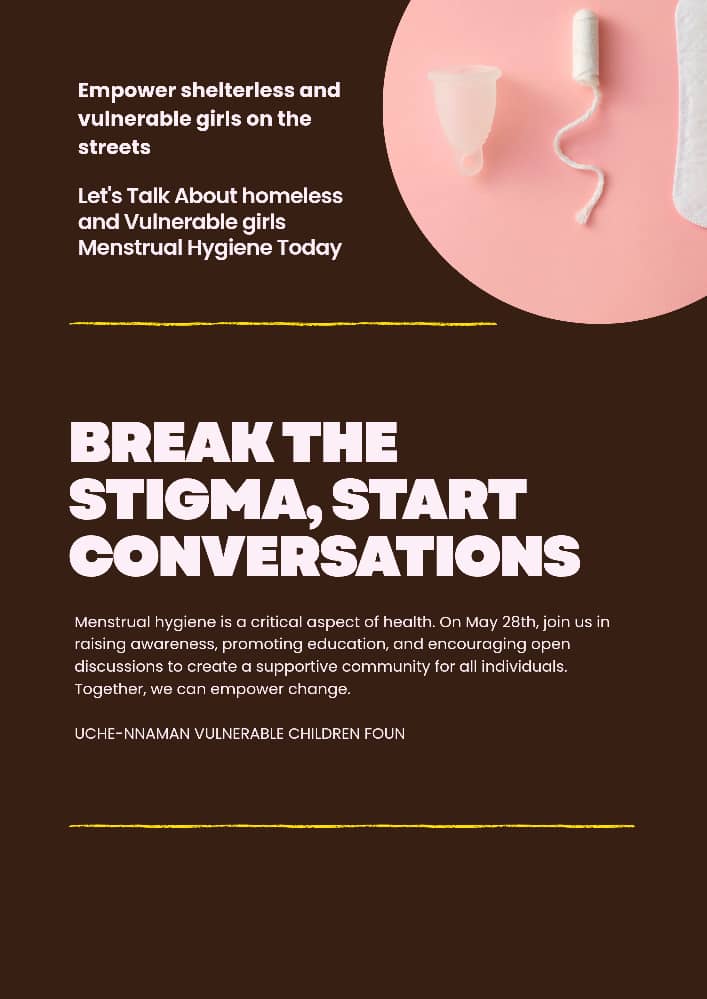
In many parts of Nigeria—especially in the South-East—menstruation remains a taboo topic. It is considered sacred and often shrouded in secrecy, particularly from young girls. Many parents still believe that discussing menstruation with their daughters might lead to early sexual curiosity or promiscuity. This belief, however, is far from the truth. Instead, this silence leaves many girls unprepared, scared, and vulnerable.
During the course of writing this message, a young woman shared her personal experience with me. She recalled the fear and confusion she felt the first time she menstruated. Believing she had an internal injury, she ran to her mother in tears. Only then did her mother explain what menstruation was. Though relieved, she expressed how different it could have been if she had known in advance.
Now imagine the thousands of vulnerable girls living on the streets across Nigeria. Who will they run to when they menstruate? Who will provide them with pads—or even alternative hygienic materials? Who will educate them on menstrual hygiene and guide them through this important stage of their development?
Have they ever been taught what menstruation truly is?
How many of them suffer silently, dealing with infections and discomfort simply because they do not know what to do?
These questions are not just rhetorical—they are urgent. They are why the Uche-Nnamani Vulnerable Children Foundation has decided to take action today, in commemoration of World Menstrual Hygiene Day.
We recognize that the lack of menstrual education and support has left too many girls unprepared and uninformed. It has confined them to a cycle of poor hygiene, stigma, and avoidable health challenges. Through deep reflection and commitment, we have developed a plan to help end this unjust reality for vulnerable girls.
Today, we stand with every girl who has ever felt afraid, ashamed, or unsupported during her period. We are committed to breaking the silence, providing education, and ensuring that no girl is left alone in her menstrual journey—especially those most at risk.
Let us give our girls the dignity they deserve.
By: Uche-nnamani
Executive Director
*Uche-Nnamani Vulnerable Children Foundation*


